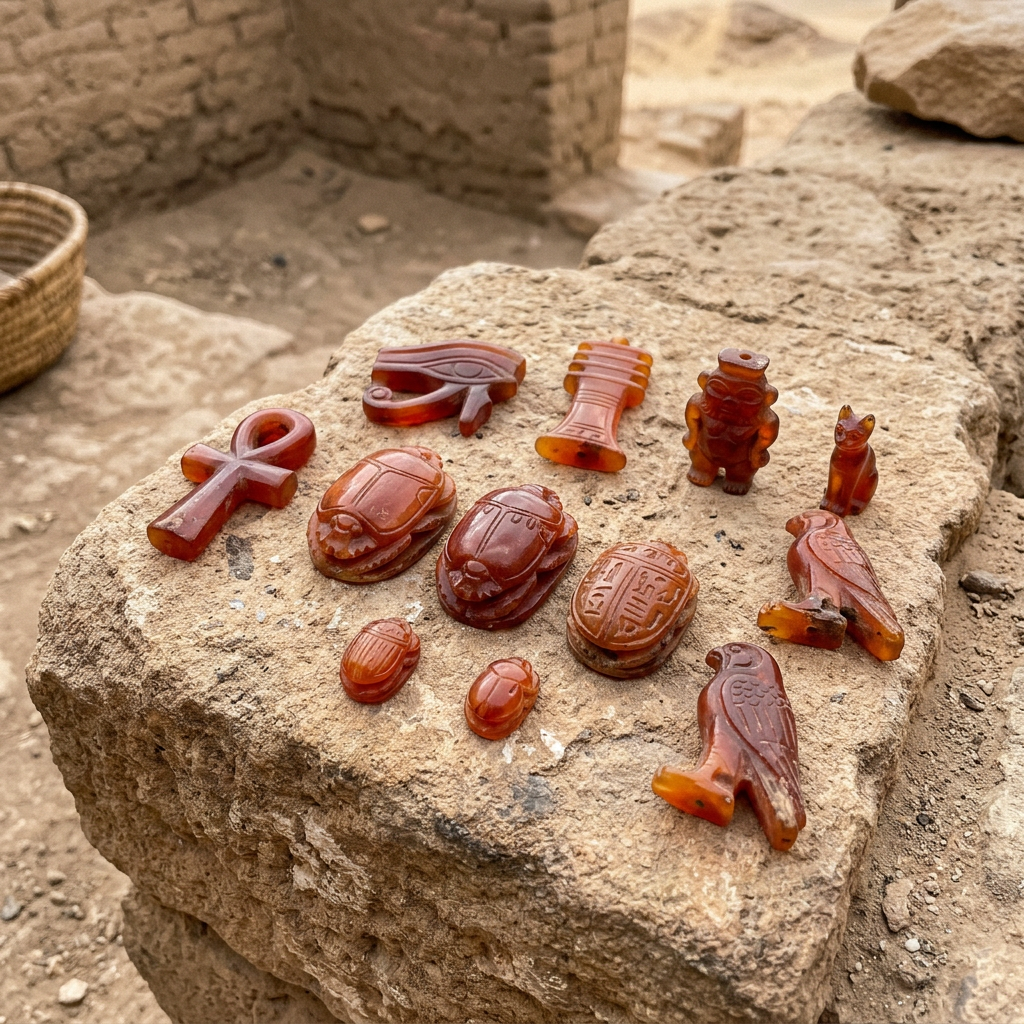
Few gemstones have a history as rich and colorful as Carnelian. With its warm shades of orange, red-orange, and amber, Carnelian has been treasured for thousands of years by civilizations around the world. From the tombs of Egyptian pharaohs to the seals of Roman officials, this vibrant gemstone has long been associated with courage, strength, protection, and personal power.
Today, Carnelian remains one of the most popular gemstones for jewelry, admired not only for its fiery beauty but also for its deep historical and cultural significance.
What Is Carnelian?
Carnelian is a variety of chalcedony, a mineral within the quartz family. Its distinctive color ranges from pale orange to deep reddish-brown and is caused by the presence of iron oxide within the stone.
The finest Carnelian gemstones often display rich reddish-orange hues that seem to glow when exposed to light. This warm appearance has earned Carnelian nicknames such as the “Sunset Stone” and the “Stone of Motivation.”
Because of its durability and beautiful color, Carnelian has been used in jewelry, carvings, and decorative objects for thousands of years.
Ancient Origins and Discovery
Unlike many gemstones that were formally identified in modern times, Carnelian has been known and used since prehistoric periods.
Archaeological discoveries have found Carnelian beads dating back more than 4,500 years, making it one of humanity’s oldest known gemstones.
Ancient civilizations that valued Carnelian included:
- Ancient Egypt
- Mesopotamia
- Greece
- Rome
- Persia
- India
Carnelian artifacts have been uncovered in royal tombs, temples, and trading centers throughout the ancient world, demonstrating its importance across many cultures.
Carnelian in Ancient Egypt
The Ancient Egyptians held Carnelian in especially high regard.
They associated the stone with the life-giving energy of the sun and believed it carried protective and restorative powers. Carnelian was often referred to as the “Sunset Stone” because of its fiery glow.
Egyptian artisans used Carnelian in:
- Amulets
- Scarabs
- Rings
- Necklaces
- Ceremonial jewelry
- Funerary objects
The gemstone was frequently placed in tombs to accompany the deceased into the afterlife. It was also associated with the goddess Isis, who symbolized motherhood, healing, and protection.
Some historians believe Carnelian was one of the most important gemstones in Egyptian jewelry craftsmanship.
Carnelian in Ancient Rome and Greece
The Greeks and Romans also prized Carnelian for both practical and decorative purposes.
Roman officials often used Carnelian to create engraved signet rings and seals because hot wax would not stick to the polished stone. These seals were used to authenticate documents and symbolize authority.
Warriors sometimes carried Carnelian talismans into battle, believing the stone promoted courage, confidence, and strength.
Its vibrant color became associated with ambition, leadership, and determination.
Sources of Carnelian Around the World
Carnelian is found in several regions worldwide, including:
- India
- Brazil
- Uruguay
- Madagascar
- Egypt
- Germany
- Russia
- United States
India has historically been one of the most important sources of high-quality Carnelian and remains a major producer today.
Many Carnelian gemstones develop their rich color naturally, while others are gently heat-treated to enhance their orange and red tones.
Symbolism and Cultural Significance
Throughout history, Carnelian has symbolized:
- Courage
- Confidence
- Motivation
- Vitality
- Leadership
- Creativity
- Passion
- Protection
Its fiery color naturally evokes feelings of energy and determination. Many cultures believed the stone inspired action and helped individuals overcome fear and hesitation.
Because of these associations, Carnelian became a popular gemstone for leaders, warriors, artists, and merchants.
Spiritual and Metaphysical Beliefs
In modern crystal traditions, Carnelian is often considered a stone of empowerment and personal growth.
Many people believe it may help:
- Increase motivation
- Inspire creativity
- Build confidence
- Encourage positive action
- Strengthen determination
- Enhance focus
- Promote emotional balance
Carnelian is frequently associated with the sacral chakra, which is connected to creativity, passion, and personal expression.
While these beliefs are rooted in spiritual traditions and are not scientifically proven, they continue to make Carnelian one of the most sought-after gemstones in the crystal community.
Carnelian in Jewelry
Carnelian’s vibrant color and excellent durability make it ideal for jewelry.
It is commonly used in:
- Rings
- Pendants
- Necklaces
- Bracelets
- Earrings
- Beaded jewelry
- Wire-wrapped designs
The gemstone pairs beautifully with sterling silver, stainless steel, copper, and gold settings. Its warm tones complement both casual and formal styles, making it a versatile choice for everyday wear.
Because each stone displays natural variations in color and pattern, every piece of Carnelian jewelry is unique.
Caring for Carnelian
Carnelian ranks between 6.5 and 7 on the Mohs hardness scale, making it relatively durable and suitable for regular wear.
To care for your Carnelian jewelry:
- Clean with warm water and a soft cloth.
- Avoid harsh chemicals and abrasive cleaners.
- Store separately from harder gemstones.
- Remove jewelry before strenuous activities.
With proper care, Carnelian jewelry can maintain its beauty for generations.
Why Carnelian Remains Popular Today
Carnelian’s enduring appeal lies in its combination of beauty, history, and symbolism. For thousands of years, people have admired this gemstone for its vibrant color and meaningful associations with courage, creativity, and personal power.
Whether worn as a statement piece, collected for its historical significance, or appreciated for its warm glow, Carnelian continues to inspire confidence and vitality in those who wear it.
Discover Carnelian Jewelry at Griseline.com
Bring the warmth and energy of Carnelian into your jewelry collection. Our carefully selected Carnelian pieces showcase the gemstone’s rich colors and timeless beauty, creating meaningful jewelry that celebrates confidence, creativity, and personal strength.
Visit Griseline.com today and explore our unique Carnelian jewelry collection designed to inspire and empower every day.
Sources
- Gemological Institute of America (GIA) gemstone reference materials.
- International Gem Society (IGS) Carnelian gemstone guide.
- Smithsonian Institution Mineral Sciences Department.
- British Museum collections and studies of ancient Carnelian artifacts.
- Archaeological research on Egyptian, Roman, and Mesopotamian jewelry.
- Geological studies of chalcedony and quartz mineral formations.