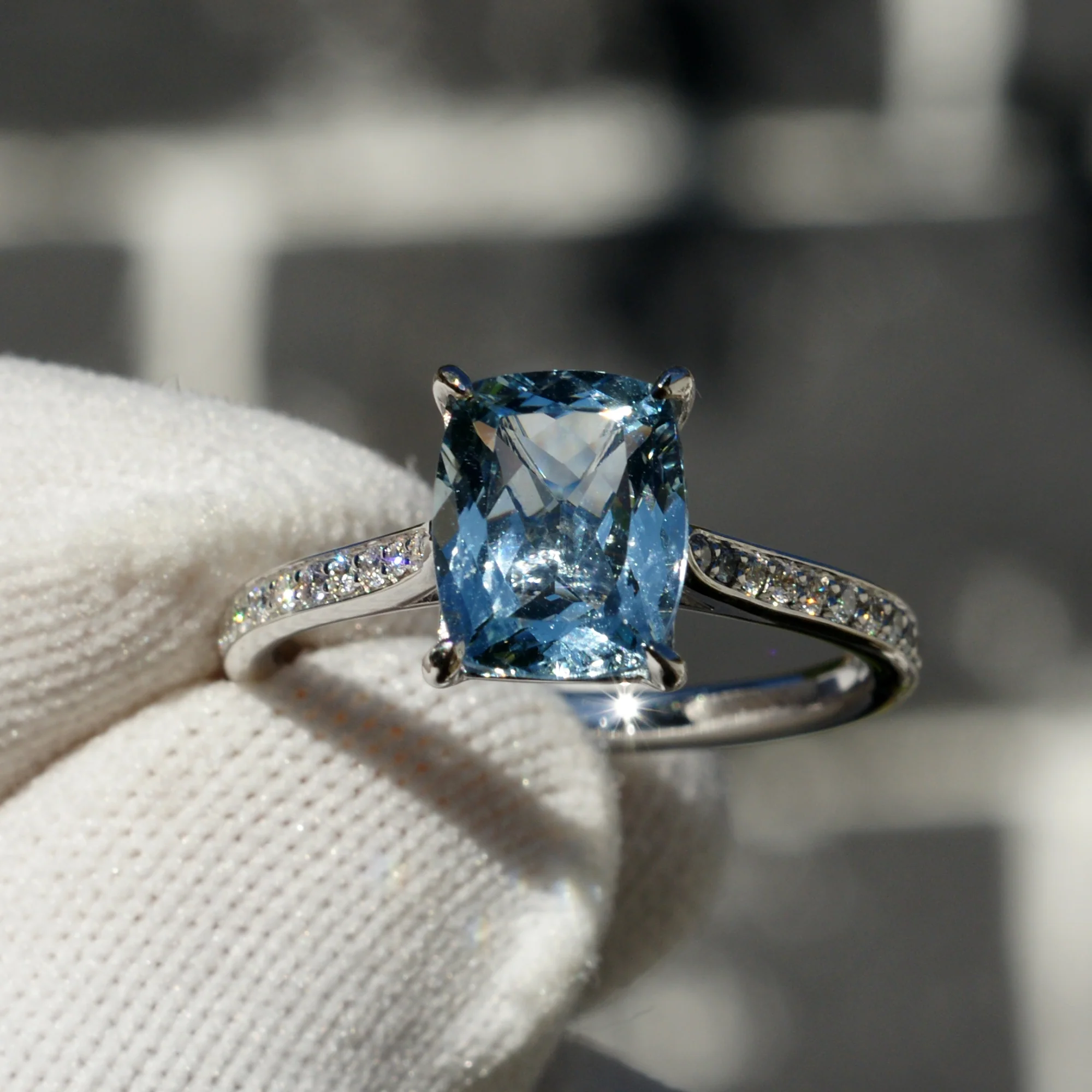
Aquamarine is a blue to blue-green variety of the mineral beryl, prized as a gemstone. Its name comes from the Latin aqua marina, meaning “sea water,” reflecting its oceanic color. Valued for its clarity and brilliance, aquamarine is a popular choice for jewelry and is the birthstone for March.
Key facts
- Mineral family: Beryl (Be₃Al₂Si₆O₁₈)
- Color range: Pale blue to deep blue-green
- Mohs hardness: 7.5–8
- Primary sources: Brazil, Nigeria, Madagascar, Pakistan
- Birthstone month: March
Formation and composition
Aquamarine forms in pegmatite veins through the crystallization of magma rich in beryllium and aluminum. The blue color results from trace amounts of iron (Fe²⁺ and Fe³⁺) within the beryl crystal lattice. Its durable crystal structure makes it suitable for everyday wear in rings and other jewelry.
Color and varieties
The gemstone’s hue can vary from very light blue to intense deep blue; stones with richer saturation are more valuable. Heating is often used to remove greenish tones, enhancing the pure blue color. The most sought-after material, known as “Santa Maria aquamarine,” originates from Brazil and exhibits a vivid, medium-dark blue.
Historical and symbolic significance
Historically, aquamarine was believed to calm waves and protect sailors, symbolizing courage and serenity. In modern gemology, it is associated with tranquility, communication, and clarity. Its light, clear color complements both silver and yellow gold settings.
Uses and notable localities
Brazil remains the leading producer, especially the Minas Gerais region. Other significant sources include Nigeria, Mozambique, and Pakistan’s Shigar Valley. Aquamarine is cut into faceted gems, cabochons, and ornamental carvings, valued for its transparency and refined luster.